Section 1
How Electricity Actually
Works in Houston
Three entities are involved. Understanding the difference saves you from confusion (and bad decisions).
ERCOT
Manages the Grid
The Electric Reliability Council of Texas oversees the entire state grid — generation, load balancing, and reliability. You never interact with ERCOT directly.
The Grid OperatorCenterPoint Energy
Delivers Your Power
CenterPoint owns the physical wires and infrastructure in Houston. They deliver electricity to your home. Their fee is fixed and unavoidable — it's on every bill.
The Wire CompanyYour Provider (REP)
Bills You for Power
Retail Energy Providers (REPs) buy electricity from generators and sell it to you. This is who you choose — and where the pricing competition happens.
Your ChoiceThe Key Insight:
Delivery is fixed — you can't change that cost. But pricing is flexible. Choosing the right provider and plan is where you save or overpay.
Section 2
The Three Types of
Electricity Plans
Fixed Rate
✅ Best for Most HomeownersYour rate per kWh is locked in for the contract term (typically 6–24 months). Bills still vary with usage, but the rate itself won't change.
Best for: Most homeowners — especially first year in Houston
Variable Rate
⚠️ Higher RiskYour rate changes month-to-month based on market conditions. Can be very low — and can spike significantly during high-demand periods.
Best for: Short-term residents only — not ideal for homeowners
Renewable Plans
🌱 Growing Choice100% wind or solar-backed electricity. Your power comes from renewable sources. These plans are increasingly competitive in pricing.
Best for: Sustainability-focused buyers willing to pay a small premium
Section 3 — Read This Carefully
Common Traps That Cost
Houston Homeowners Money.
The cheapest advertised plan is often not the cheapest plan long-term. Here's what to watch for.
Low Teaser Rates
Plans advertise "5.9¢/kWh" — but that rate only applies at exactly 1,000 kWh. Use 800 or 1,200 kWh and the effective rate jumps significantly. Always check the Electricity Facts Label (EFL).
Tiered Pricing
Some plans charge one rate for the first 500 kWh and a much higher rate above that. If you're in a larger Houston home using 2,000+ kWh in summer, this can be brutal.
Hidden Base Charges
A "$9.95/month base charge" adds $120/year before you use a single kWh. Some plans waive this above a usage threshold — but you need to know to look.
Early Termination Fees
Breaking a 12-month contract early typically costs $100–$250. If you're unsure how long you'll stay, factor this into your plan choice.
Auto-Renewal Traps
Many plans auto-renew at a higher rate when your contract ends. Set a calendar reminder 30 days before your contract expires so you can shop again.
Bundled Gadget Offers
Free Nest thermostats, smart bulbs, or gift cards can distract from a worse underlying rate. Calculate the total 12-month cost, not the giveaway value.
The #1 Rule
Always look at the effective rate at 500, 1,000, and 2,000 kWh — not just the advertised headline rate. The Electricity Facts Label (EFL) on PowerToChoose.org shows this. It's required by law.
Section 4
What You'll Actually Pay
in Houston.
Small home / condo (<1,500 sqft)
Summer
$80–$140
Winter
$50–$90
Mid-size home (1,500–2,500 sqft)
Summer
$150–$220
Winter
$80–$130
Large suburban home (2,500–4,000 sqft)
Summer
$200–$320
Winter
$100–$170
Very large home (4,000+ sqft)
Summer
$300–$500+
Winter
$150–$250
Key Variables
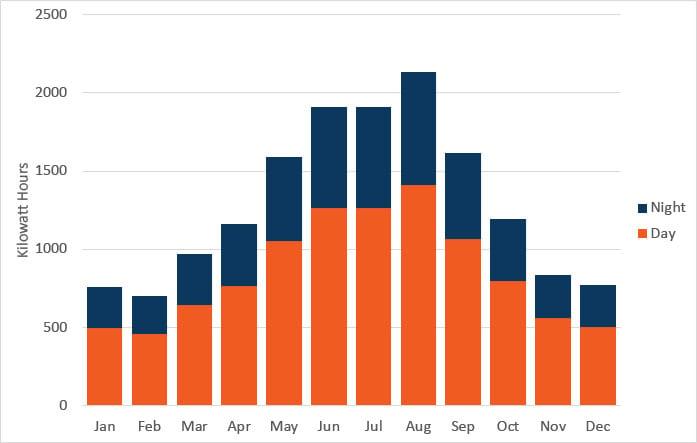
Monthly electricity usage in Houston — August peak is 2–3x January usage. Plan your budget accordingly.
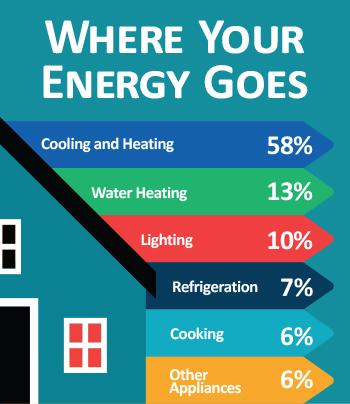
58% of home energy goes to cooling and heating. In Houston, your HVAC is the single biggest lever on your bill.
Section 5 — The Simple Framework
How to Pick the Right Plan
in 4 Steps.
Estimate Your Usage
A 2,000 sqft Houston home uses roughly 1,000–1,500 kWh/month in winter and 1,500–2,200 kWh/month in summer. Use this as your comparison baseline.
Pro tip: Ask the seller for 12 months of utility bills. This is the most accurate estimate you'll get.
Go to PowerToChoose.org
This is the official Texas comparison tool. Enter your zip code and estimated usage. Every licensed provider's plans must be listed here — by law.
Pro tip: Use your zip code, not a general "Houston" search — rates can vary by area.
Compare Effective Rates at 1,000 AND 2,000 kWh
PowerToChoose shows effective rates at 500, 1,000, and 2,000 kWh. Never compare just the headline rate. Compare at the usage level closest to yours.
Pro tip: The "cheapest" plan at 1,000 kWh is often NOT the cheapest at 2,000 kWh. Always check both.
Lock In a 12-Month Fixed Rate
Choose a straightforward fixed-rate plan with a reputable provider. Avoid variable rates unless you're renting short-term. Set a calendar reminder 30 days before your contract ends.
Pro tip: Reputable providers: Reliant, TXU, Gexa, 4Change Energy, Pulse Power. Read reviews before signing.
Section 6 — Home + Energy Connection
Your Home Choice Affects
Your Electricity Bill.
The plan matters — but the home itself is equally important. Here's what to know by area and home type.
New Construction (Katy, Bridgeland, Elyson)
Most EfficientBuilt to current energy codes. Better insulation, double-pane windows, high-SEER AC units. Expect 15–25% lower bills vs. comparable older homes.
The Woodlands (Mixed Age)
VariableNewer sections are efficient. Older sections (pre-2000) can have aging AC systems and less insulation. Ask specifically about HVAC age.
Inner Loop / Montrose / Heights
Higher VariabilityOlder homes (1950s–1990s) often have higher energy costs. Window units, older HVAC, and original insulation can make summer bills significantly higher.
Mid-Range Suburbs (Cypress, Sugar Land)
Ask About HVACMix of older and newer builds. Focus on HVAC age (under 10 years ideal) and whether spray foam insulation was used in newer construction.

The Woodlands — a mix of older and newer construction means electricity costs vary significantly block-to-block.
Before You Make an Offer:
Free Guidance
Want Help Choosing the Right Plan?
We'll walk you through what to look for based on your home size, area, and budget.